
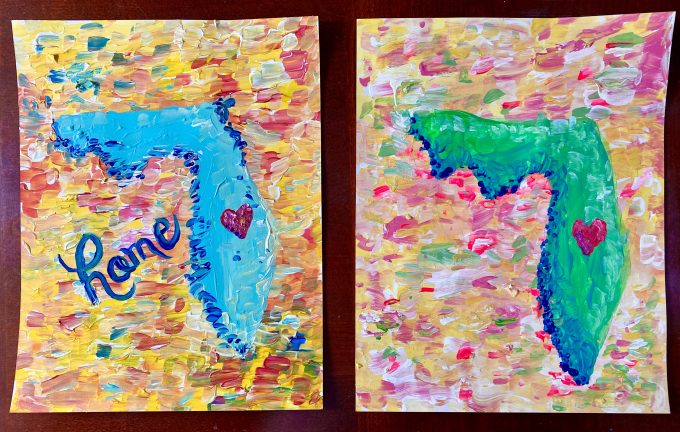
The State of Florida–as an Impressionist Painting!
This painting is going to be full of texture and bright colors–and is more about the imperfection than creating a perfect perfect picture. SO, go easy on yourself and have fun sloshing some paint around a canvas for a bit. It’s just paint, and can absolutely be painted over if you’re not happy. This particular style of painting really lends itself to corrections.
The painting takes about an hour to do, but you can continue to refine after our meeting is over.
Painting Materials
You can work with ANY colors you have, but here are the basics:
- Canvas or paper
- Wide brush and thin brush
- Water (for rinsing brushes)
- Paper towels (for drying brushes)
- Acrylic paints
- State of Florida cut out click to download file
The State of Florida outline is optional. You’ll be free hand drawing Florida onto your canvas, or you can print the Florida in the file, cut it out and then trace it on.
Paints
On the paints–the picture on the left above, the warm tones used (lots of) white, yellow, red, blue and teal.
For the Lilly Pulitzer coloring on the right, you’ll need (lots of) white, yellow, green, pink, hot or neon pink, teal, blue
Or, use whatever you have, as long as you have white as one of your colors. The gold label paints are these by Liquitex, but the Americana/Folk Art brand that come in little bottles work just fine.
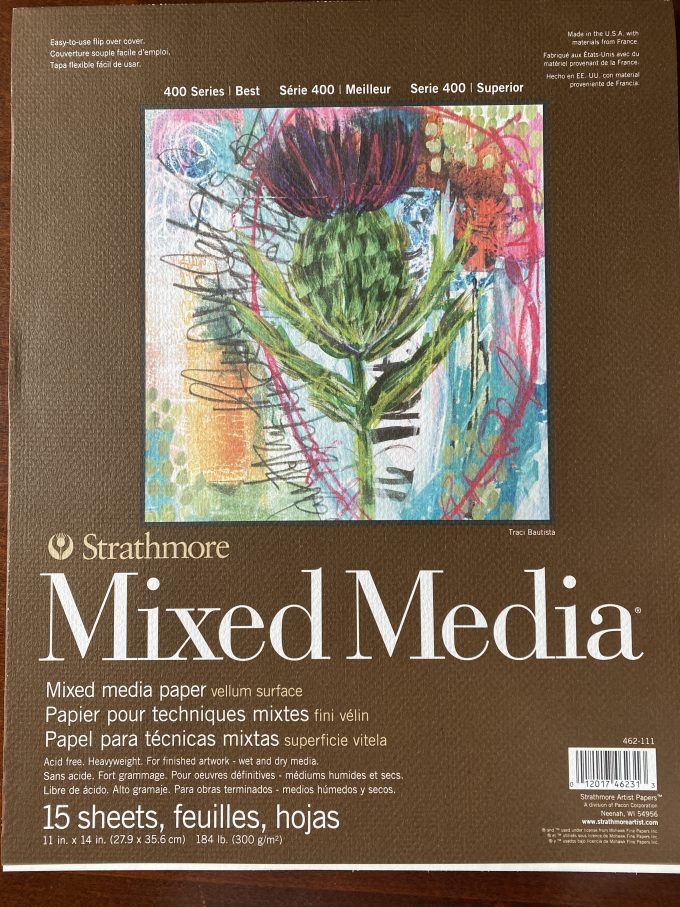
CANVAS
You can use the stretched canvas you buy in multipacks at the craft store if you’d like. I produce a lot of “practice” type paintings, and I find this mixed media paper to do just fine for painting. You can order both from Amazon if you so choose, or order from Michael’s online for in-store pick up and have them bring it to your car.
If you’ve done quite a few of these paint party-type projects in the past, you might like to recycle those canvases. Instead of dropping them to Goodwill, cover the old painting with a coat of gesso (also available at the craft store) and once it dries, you’re ready to create a new piece of art. Professional artists start with gesso as a base for their paintings to treat new canvases.
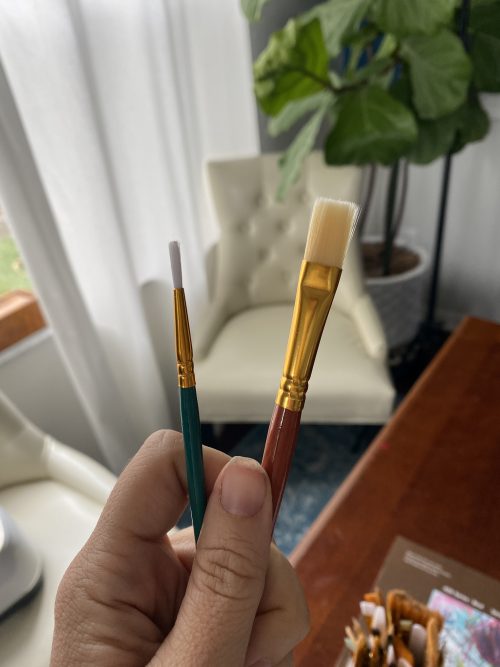
The brushes
I’m including a picture of my brushes just in case you need a visual. We’ll be working with wide strokes and thin strokes, so there needs to be visible difference in the size of your paint brushes.
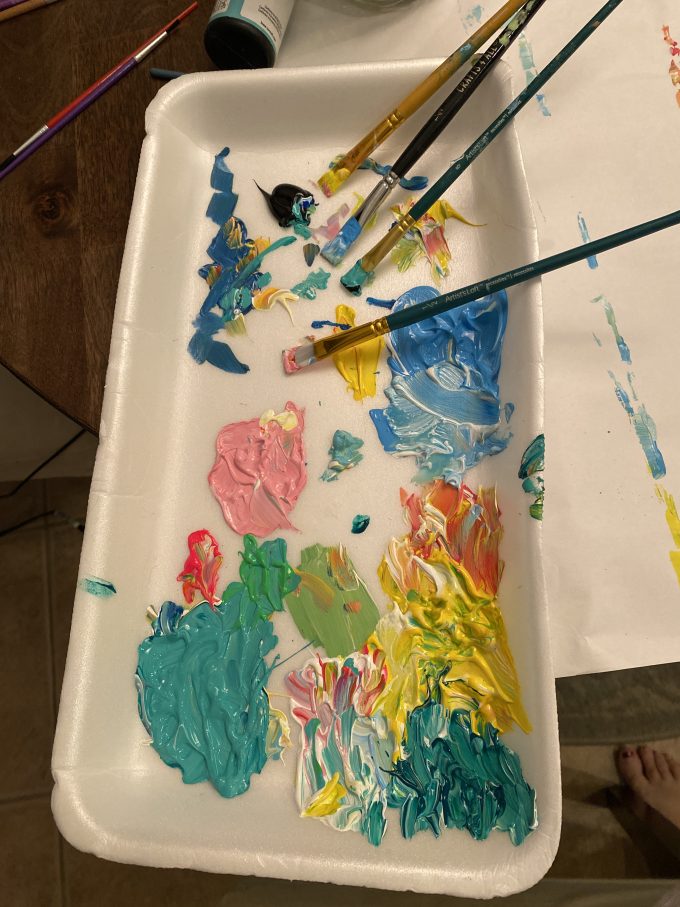
Palettes
Just a few ideas for things to put your paint in. If my meat or veggies come in white Styrofoam trays, I always wash them out really well and save them for a paint project. The paint moves around so beautifully on them, especially when mixing colors. Other things I like to use: plastic plates, coated paper plates, store bought palettes with wells, large pieces of waxed paper, aluminum foil sheets.
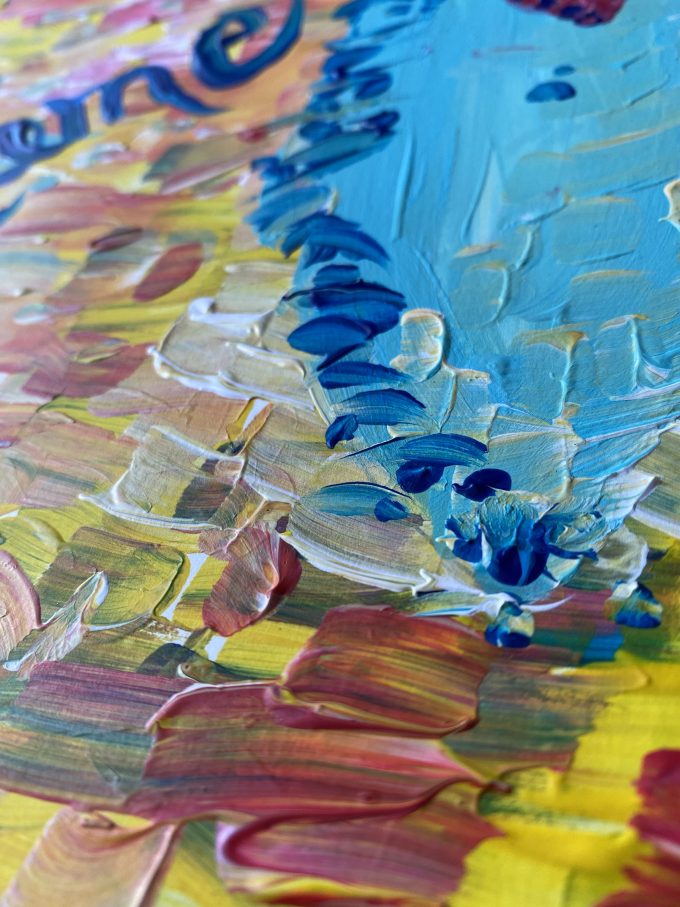
A closer look at the Impressionist Art
Things like texture are incredibly hard to show across a Zoom screen, so I wanted to show you a close up of one of the Florida paintings. We’re going to use a double loading technique to get all those lovely stripes of color, and we’re going to load our brushes REALLY full to get some of those gorgeous bumps of paint in our finished product. And, like most impressionist paintings, these are better viewed from a few feet than really close up.
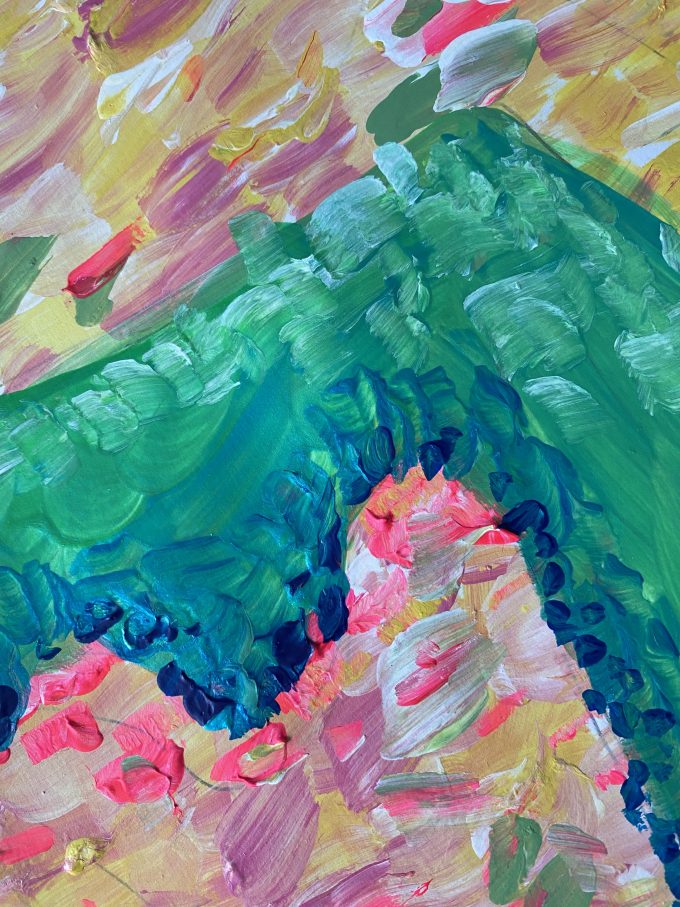
We’ll do a little shading as well with very short brush strokes. Here’s a close up for when we come to that part!